DreamPRM
Abstract
DreamPRM-1.5: Unlocking the Potential of Each Instance for Multimodal Process Reward Model Training
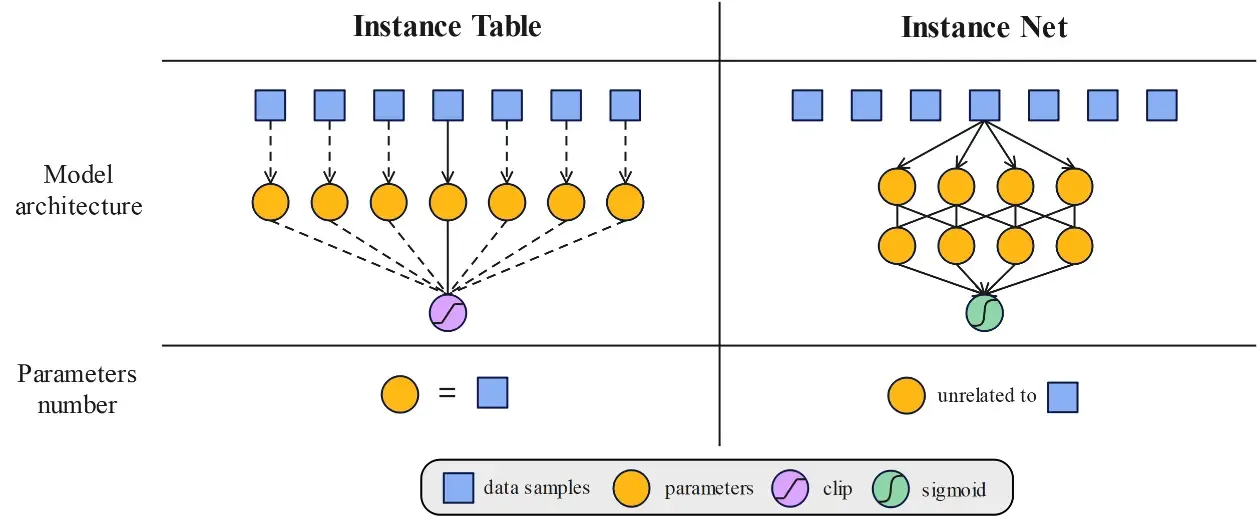
Training multimodal process reward models (PRMs) is challenged by distribution shifts and noisy data. We introduce DreamPRM-1.5, an instance-reweighted framework that adaptively adjusts the importance of each training example via bi-level optimization. We design two complementary strategies: Instance Table, effective for smaller datasets, and Instance Net, scalable to larger ones. Integrated into test-time scaling, DreamPRM-1.5 achieves 84.6 accuracy on the MMMU benchmark, surpassing GPT-5.
Overview
By integrating DreamPRM-1.5 into test-time scaling, we achieve a new state-of-the-art accuracy of 84.6 on the validation set of MMMU benchmark, further advancing the performance frontier of the strongest existing model, GPT-5-mini. Moreover, we conduct a thorough sanity check on instance reweighting, which highlights DreamPRM-1.5’s potential to approach oracle-level performance under test-time scaling.
| Category | Model / Method | Accuracy |
|---|---|---|
| Leaderboard (external, top-performing models) | GPT-5 w/ thinking | 84.2 |
| Gemini 2.5 Pro Deep-Think | 84.0 | |
| o3 | 82.9 | |
| Test-time Scaling (built on GPT-5-mini w/ thinking) | Base: GPT-5-mini w/ thinking | 80.0 |
| VanillaPRM — No Selection | 79.1 (-0.9) | |
| Self-consistency | 81.4 (+1.4) | |
| VisualPRM | 80.5 (+0.5) | |
| DreamPRM-1.5 — Instance Table | 84.6 (+4.6) | |
| DreamPRM-1.5 — Instance Net | 83.6 (+3.6) |
Model Checkpoints
| Model | Hugging Face Link |
|---|---|
| DreamPRM-1.5-InstanceTable | 🤗 Checkpoint link |
| DreamPRM-1.5-InstanceNet | 🤗 Checkpoint link |
Quick Start
All commands below are illustrative—rename scripts / paths to match your repo.
1. Codes
Git clone our repository, creating a python environment and ativate it via the following command
git clone https://github.com/coder-qicao/DreamPRM-1.5.git
cd DreamPRM-1.5
2. Environment
# (a) create conda env
conda create -n DreamPRM-1.5 python=3.10 -y
conda activate DreamPRM-1.5

# (b) install requirements
pip install -r requirements.txt   # torch betty-ml, transformers, accelerate, ...
Verify the installation of torch and torchvision is successful by running python -c "import torchvision; print(torchvision.__version__)". If it outputs the version number without any warnings or errors, then you are good to go. If it outputs any warnings or errors, try to uninstall torch by conda uninstall pytorch torchvision torchaudio cudatoolkit and then reinstall them following here. You need to find the correct command according to the CUDA version your GPU driver supports (check nvidia-smi).
3. Instance-reweighting
The current version of DreamPRM-1.5 is built on InternVL3-1B. Please download InternVL3-1B weights from 🤗InternVL3-1B.
Instance-reweighting for DreamPRM-1.5 fine-tuning:
# cold start
bash run_coldstart.sh
# Instance-Table or Instance-Net
bash run_table.sh
bash run_net.sh
You need at least 80 GB GPU memory for the training.
Best-of-N selection using re-trained PRM:
Use the re-trained PRM to select the most promising CoT among the candidates. Try different aggregation functions—such as mean, log-mean, or other variants—to evaluate and aggregate step-level scores effectively.
python test.py4. Configuration Parameters
Data file path and model path
| Parameter | Type | Default | Description |
|---|---|---|---|
--train_json_file | str | "./data/train.json" | Training data file path |
--meta_json_file | str | "./data/meta.json" | Meta data file path |
--weights_path | str | "./weights" | Model weights path |
--reward_model | str | "OpenGVLab/InternVL3-1B" | Reward model |
Bi-level optimization configuration
| Parameter | Type | Default | Description |
|---|---|---|---|
--iteration_num | int | 100000 | Total iterations |
--save_every_iterations | int | 1 | Save frequency |
--unroll_steps | int | 1 | Unroll steps |
--gradiant_accumulation | int | 1 | Gradient accumulation steps |
--gradiant_clipping | float | 1.0 | Gradient clipping value |
--device | str | "cuda" | Device type |
--precision | str | "bf16" | Precision mode |
--strategy | str | "default" | Training strategy |
--rollback | flag | False | Enable rollback |
--baseline | flag | False | Use baseline |
--seed | int | 1 | Random seed |
--local_rank | int | 0 | Local rank for distributed training |
Lower-level optimization hyperparameters
| Parameter | Type | Default | Description |
|---|---|---|---|
--lr | float | 5e-5 | Learning rate |
--momentum | float | 0.9 | Optimizer momentum |
--weight_decay | float | 0.01 | Weight decay |
--batch_size | int | 1 | Batch size |
--scheduler_step_size | int | 1000 | Scheduler step size |
--scheduler_gamma | float | 0.95 | Scheduler decay factor |
Upper-level optimization hyperparameters
| Parameter | Type | Default | Description |
|---|---|---|---|
--meta_lr | float | 1e-1 | Meta learning rate |
--meta_momentum | float | 0.9 | Meta optimizer momentum |
--meta_weight_decay | float | 1e-3 | Meta weight decay |
--meta_batch_size | int | 1 | Meta batch size |
--meta_scheduler_step_size | int | 1000 | Meta scheduler step size |
--meta_scheduler_gamma | float | 0.95 | Meta scheduler decay factor |
Other important parameters
| Parameter | Type | Default | Description |
|---|---|---|---|
--retrain | bool | False | Retrain flag |
--activation_function | str | "LeakyReLU" | Activation function (LeakyReLU | ReLU | No | Clip) |
--aggregation_function | str | "mean" | Aggregation function (mean | max | min | log_mean) |
--loss_target | str | "both" | Loss target (+ | both) |
--initialization | float | 1.0 | Initialization value |
--max_patch_num | int | 6 | Maximum patch number |
--scheduler_type | str | "cosine_schedule_with_warmup" | scheduler type |
Acknowledgement
License
This repository is under Apache License 2.0.
Citation
If you use this work in your research, please cite:
@misc{cao2025dreamprmdomainreweightedprocessreward,
      title={DreamPRM: Domain-Reweighted Process Reward Model for Multimodal Reasoning},
      author={Qi Cao and Ruiyi Wang and Ruiyi Zhang and Sai Ashish Somayajula and Pengtao Xie},
      year={2025},
      eprint={2505.20241},
      archivePrefix={arXiv},
      primaryClass={cs.LG},
      url={https://arxiv.org/abs/2505.20241},
}